





Vampire Vape – Technical Formulation & Device Compatibility Guide (Ireland 2026)
Technical Review: This article was originally published in earlier form and fully updated in February 2026 to reflect current formulation standards and Irish regulatory requirements.
What Is Vampire Vape?
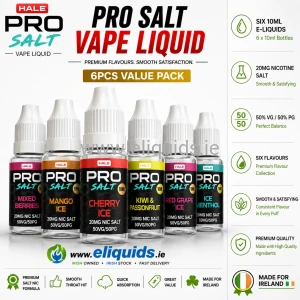
Vampire Vape is a UK-developed e-liquid brand formulated primarily in 50/50 PG/VG ratios and designed for regulated MTL vape devices operating within EU TPD regulations.
The brand is structured around consistent viscosity control, layered flavour architecture, and compatibility with lower-wattage pod systems commonly used across Ireland.
How Does Vampire Vape Formulation Work?
Most formulations use a 50% Propylene Glycol (PG) and 50% Vegetable Glycerine (VG) ratio. This balance allows:
- Stable capillary wicking in high-resistance coils (0.8Ω–1.2Ω)
- Moderate vapour density suitable for MTL airflow
- Efficient flavour transmission at 10–18W
PG enhances flavour clarity and throat sensation, while VG supports vapour production and viscosity stability.
Is Vampire Vape TPD Compliant in Ireland?
Yes. Nicotine-containing products distributed in Ireland must comply with the EU Tobacco Products Directive (TPD), including:
- Maximum 10ml bottle size for nicotine liquids
- Maximum 20mg/ml nicotine concentration
- EU-CEG product notification requirements
All nicotine products are restricted to adults aged 18+ under Irish legislation.
Why Does 50/50 Ratio Matter for Device Compatibility?
The 50/50 viscosity profile is optimised for Mouth-to-Lung systems and compact pod devices. Higher VG ratios may reduce wicking efficiency in smaller coils, while higher PG ratios may increase throat intensity.
Technical Specification Matrix
Open Technical Matrix
Parameter
Specification
Operational Context
PG/VG Ratio
50% / 50%
Optimised for MTL
Nicotine Format
Freebase / Nicotine Salts
Low-wattage compatibility
Recommended Coil Range
0.8Ω – 1.2Ω
10–18W operation
Bottle Size (Nicotine)
10ml
TPD limit
Flavour Architecture & Layering
Vampire Vape formulations are generally structured in three layers:
- Primary note: dominant fruit or cooling profile
- Balancing mid-layer: acidity or sweetness modulation
- Finish layer: cooling compounds or textural depth
This layered structure allows flavour stability across different airflow settings and coil types.
Coil Residue & Sweetener Load Considerations
High-intensity flavour systems may increase the rate of coil residue formation, commonly referred to as “coil gunking.” This is associated with aromatic compound density and sweetener interaction during repeated heating cycles.
In practical use, more concentrated flavour profiles may accelerate cotton darkening and resistance fluctuation over time. This reflects thermal interaction rather than formulation defect.
- MTL coils in the 0.8Ω–1.2Ω range provide better heat control.
- Operating between 10–16W may reduce residue buildup.
- Monitoring resistance stability helps identify coil degradation early.
Users prioritising coil longevity may prefer moderate power settings and consistent airflow management.
Device Compatibility Overview
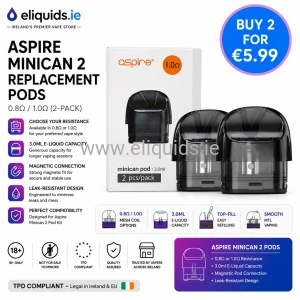
Due to viscosity and formulation structure, Vampire Vape liquids are generally compatible with:
- Refillable pod systems
- MTL starter kits
- Compact regulated devices
Use in low-resistance sub-ohm coils may increase saturation rates and reduce efficiency.
Ireland Regulatory Context
In Ireland, nicotine-containing e-liquids operate within the Public Health (Tobacco Products and Nicotine Inhaling Products) framework. Retail and distribution align with adult-only sales restrictions (18+) and EU compliance standards.
FAQ – Vampire Vape Ireland
Is Vampire Vape suitable for pod systems?
Yes. The 50/50 PG/VG ratio is typically compatible with MTL pod systems using higher-resistance coils.
Why do some flavours reduce coil lifespan?
Higher aromatic density and sweetener interaction during heating may increase residue formation over time.
Does 50/50 work in sub-ohm devices?
It can function, but it is generally optimised for MTL rather than high-wattage sub-ohm systems.
Intent Disclosure
This article is provided for informational and technical reference purposes only. It does not promote nicotine use or make health-related claims.


