





Maryliq by Lost Mary – Technical Nicotine Salt Guide for Ireland (2026)
Technical Review: This article was fully updated in February 2026 to reflect current nicotine salt formulation standards and Irish regulatory requirements.
What Is Maryliq?
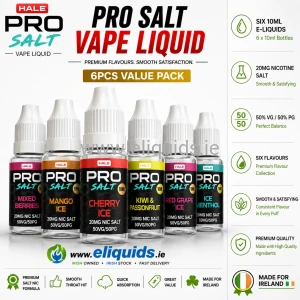
Maryliq is a nicotine salt e-liquid range developed by Lost Mary, formulated primarily in 50/50 PG/VG ratios and designed for regulated low-wattage pod systems operating under EU TPD regulations.
The range adapts flavour profiles commonly associated with disposable-style devices into refillable pod-compatible liquids distributed within Ireland’s adult-only nicotine framework (18+).
How Do Nicotine Salts in Maryliq Work?
Nicotine salts are created by combining nicotine with an organic acid, typically benzoic acid, to reduce alkalinity and modify absorption characteristics. This allows:
- Smoother inhalation at higher nicotine strengths
- Reduced throat harshness compared to equivalent freebase levels
- Stable delivery in compact pod systems
This chemistry supports efficient aerosolisation at moderate power levels, typically between 10–18W.
Is Maryliq TPD Compliant in Ireland?
Yes. In Ireland, nicotine-containing e-liquids must comply with the EU Tobacco Products Directive (TPD), including:
- Maximum 10ml bottle size
- Maximum 20mg/ml nicotine concentration
- EU-CEG notification requirements
All nicotine products are restricted to adults aged 18+ under Irish legislation.
Why Is Maryliq Designed for Pod Systems?
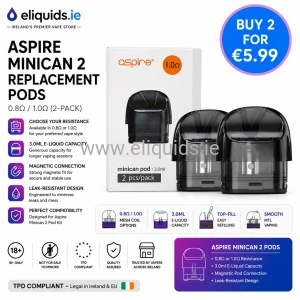
The 50/50 PG/VG viscosity ensures consistent capillary wicking in small pod cartridges using higher-resistance coils (0.8Ω–1.2Ω). Lower viscosity reduces saturation delay and supports stable performance in restricted airflow systems.
Technical Specification Matrix
Open Technical Matrix
Parameter
Specification
Operational Context
PG/VG Ratio
50% / 50%
Optimised for MTL pods
Nicotine Type
Nicotine Salt
Smooth delivery at low wattage
Nicotine Strength
Up to 20mg/ml
TPD maximum in Ireland
Recommended Coil Range
0.8Ω – 1.2Ω
10–18W operation
Flavour Structure & Delivery Stability
Maryliq formulations prioritise flavour intensity within low-power systems. Profiles are typically layered to maintain clarity at restricted airflow and moderate coil temperatures.
Nicotine salt chemistry allows efficient delivery without requiring higher wattage, preserving flavour stability in compact pod architecture.
Coil Residue & Sweetener Load Considerations
High-intensity flavour systems may increase the rate of coil residue formation over time. In pod-based systems, residue accumulation can lead to cotton darkening and minor resistance fluctuation.
- Using coils within 0.8Ω–1.2Ω improves thermal regulation.
- Operating at moderate wattage (10–16W) may reduce caramelisation of flavour compounds.
- Monitoring resistance changes can indicate progressive coil wear.
More about advanced thermal control systems designed to reduce residue formation can be found in our engineering review of the Vaporesso XROS 5, where temperature stability and power regulation are analysed in detail.
Ireland Regulatory Context
In Ireland, nicotine salt liquids operate under the Public Health (Tobacco Products and Nicotine Inhaling Products) legislation aligned with EU TPD standards. Retail practices require age verification (18+) and compliance with concentration and packaging limits.
FAQ – Maryliq Ireland
What nicotine strength does Maryliq use in Ireland?
Nicotine strengths typically reach up to 20mg/ml, which is the maximum permitted under EU TPD regulations.
Is Maryliq suitable for refillable pod systems?
The 50/50 PG/VG ratio and nicotine salt formulation are optimised for MTL pod systems operating at lower wattage.
Why can high-intensity flavours affect coil lifespan?
Higher aromatic density and sweetener interaction during repeated heating cycles may increase residue formation on the coil over time.
Intent Disclosure
This article is provided for informational and technical reference purposes only. It does not promote nicotine use or make health-related claims.


