


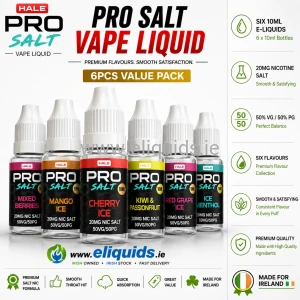


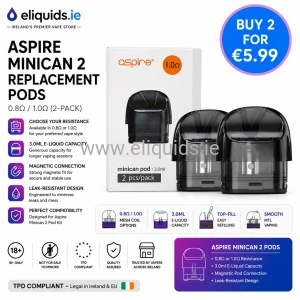

Technical Review: Updated February 2026. This article provides a neutral technical review of Gold Bar e-liquids as a consumer product category, focusing on formulation logic, pod-system compatibility and Ireland/EU regulatory context. It does not provide medical, safety or purchasing advice.
What This Review Covers (and What It Does Not)
This is not a “best flavour” ranking and it does not attempt to promote sales. Instead, it explains how to interpret Gold Bar e-liquid labels and performance behaviour in pod systems using a structured, engineering-style approach.
Definition
Gold Bar e-liquids are commercially manufactured e-liquid products sold in regulated retail formats, typically intended for low-wattage pod devices. Exact parameters (ratio, nicotine type/strength) depend on the specific SKU and must be verified on the bottle/pack label.
Key Takeaways
- Do not assume PG/VG ratio or nicotine format — verify the specific SKU label.
- Pod performance depends on viscosity, sweetener load and coil temperature, not branding.
- For most pod systems, compatibility is mainly about wicking speed and residue formation.
- Ireland retail operates under adult-only rules (18+) and EU-aligned product limits.
Formulation Structure and Composition Profile
Most e-liquids are built on a carrier base (PG/VG), flavour compounds and (where applicable) nicotine. For pod systems, the practical question is not “how strong is the flavour”, but whether the formulation behaves predictably at low power with small wicking channels.
| Parameter | What to Check on the Label | Why It Matters in Pod Kits |
|---|---|---|
| PG/VG ratio | The stated ratio (varies by SKU) | Controls viscosity, wicking speed and leak risk |
| Nicotine format | Salt vs freebase (label-dependent) | Affects perceived harshness at low wattage |
| Nicotine strength | mg/ml (must be declared) | Determines suitable airflow/power range and user tolerance |
| Sweetener intensity (practical) | Not always declared; infer from coil residue rate | Higher residue can reduce coil lifespan |
| TPD markers (where applicable) | Warnings, batch info, compliant packaging | Supports regulated-market placement and traceability |
PG/VG Ratio and Wicking Behaviour in Pod Systems
Pod devices rely on small wicking ports and relatively low power. In practice:
- Higher-PG / balanced blends generally wick faster and suit tighter MTL pods.
- Higher-VG blends may run better in more open pods or warmer coils, but can be less forgiving in small-wick cartridges.
User-clarified note: if a pod starts to taste dry early in a puff, it often indicates viscosity/wicking mismatch rather than a “bad liquid”.
Nicotine Salt Delivery Characteristics
Many pod-oriented e-liquids use nicotine salts because they can feel smoother at lower wattage. However, the correct interpretation is technical: nicotine format changes throat sensation and perceived intensity under the same airflow and power conditions.
Label-first rule: confirm nicotine type and strength on the product label before comparing performance between liquids.
Compatibility with Low-Wattage Devices
Compatibility is a function of how the liquid behaves inside the cartridge, not the brand name. The most relevant variables are:
- Wicking stability: does the coil stay saturated across a normal puff cadence?
- Residue rate: does the coil darken quickly (faster flavour drop-off)?
- Consumption efficiency: does a more open airflow increase ml/day use?
Practical mapping: tighter MTL pods typically prefer thinner/balanced blends; more open RDL pods tolerate thicker blends better.
Cost-Per-Use Considerations
For an honest comparison, cost-per-use is more reliable than bottle price. A simple evaluation framework uses:
- ml/day consumption (higher airflow and warmer coils typically increase consumption)
- coil/pod lifecycle (liquids that create more residue can shorten effective lifespan)
What this means: two similarly priced liquids can differ in weekly cost if one reduces coil longevity or increases consumption.
Regulatory Status in Ireland and EU Markets
In Ireland, nicotine vaping products are subject to adult-only retail regulation (18+) and EU-aligned requirements affecting packaging, warnings and product format limits. Regulatory frameworks also influence how products are presented and documented for retail distribution.
FAQ
Is this review recommending Gold Bar e-liquids?
No. This is a neutral technical review explaining how to interpret label parameters and predict pod-system behaviour. It does not recommend purchasing decisions.
Can I assume the PG/VG ratio or nicotine strength is always the same?
No. Ratios and strengths can differ by SKU and market. Always verify the specific bottle/pack label before comparing performance or planning device settings.
What usually reduces pod or coil lifespan with e-liquids?
Higher residue formation (often associated with sweeter profiles), higher coil temperature and poor viscosity-to-wick matching can reduce effective coil or pod lifespan.
Is this content medical or safety guidance?
No. This article is informational and describes general formulation and compatibility concepts. It does not provide medical, safety or cessation advice.
Intent Disclosure
This article provides an informational technical framework for understanding e-liquid formulation and pod compatibility in a regulated market context (Ireland). It does not constitute medical, legal or purchasing advice.
Last Updated: February 2026


