





The Evolution of Vaping Hardware: From Disposable to Closed-Pod Systems (2023–2026)
Technical Review: This article was originally published in 2023 and was fully updated in February 2026 to reflect current Irish regulatory frameworks, environmental standards and hardware development trends.
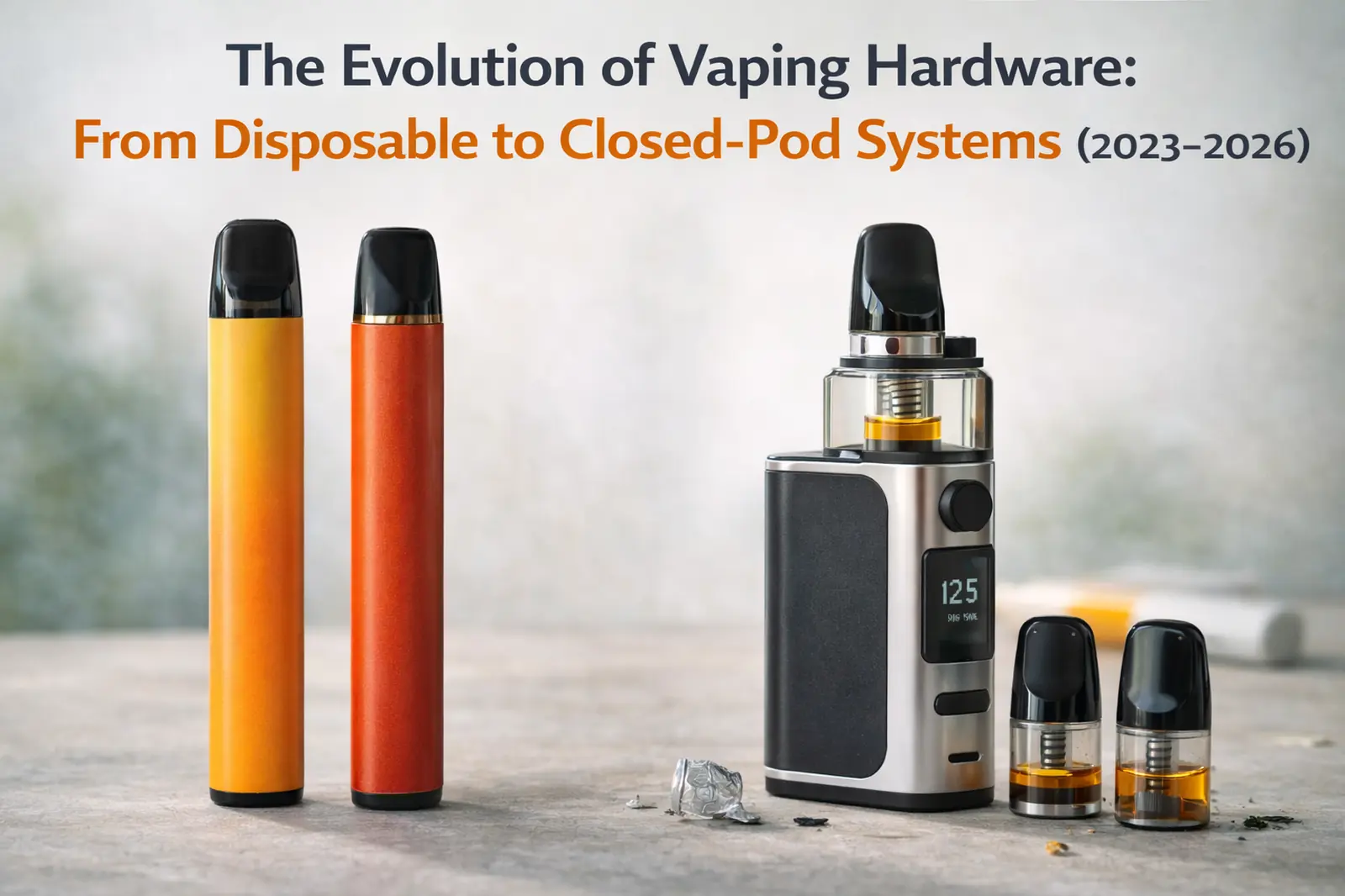
Between 2023 and 2026, the European vape market underwent a structural transition from single-use disposable devices toward rechargeable closed-pod systems. While early growth was driven by convenience-focused disposable formats, technical, environmental and regulatory pressures accelerated a shift toward reusable hardware platforms.
Definition
Closed-pod vape systems are rechargeable electronic nicotine delivery devices that use replaceable pre-filled or refillable pods, separating battery hardware from consumable e-liquid components to extend product lifecycle efficiency.
Key Takeaways
- Disposable devices dominated rapid expansion in 2022–2023.
- Battery lifecycle inefficiency became a central environmental concern.
- Mesh coil optimisation improved flavour consistency in reusable systems.
- Ireland’s E-Liquid Products Tax (EPT) in 2025 reinforced reusable dominance.
- WEEE enforcement increased pressure on single-use device formats.
Phase 1: Disposable Acceleration (2022–2023)
Disposable vape devices gained rapid market penetration due to their simplicity, sealed construction and immediate usability. These devices integrated lithium-ion batteries within non-serviceable housings designed for single operational cycles.
However, lifecycle analysis highlighted structural inefficiencies: rechargeable electrochemical cells were discarded alongside depleted e-liquid reservoirs. The limiting factor was product architecture rather than cell chemistry.
Phase 2: Technical Rebalancing (2024–2025)
As regulatory scrutiny intensified across EU markets, manufacturers refined rechargeable closed-pod systems. Key technical improvements included:
- Mesh coil geometry for improved heat distribution
- Optimised resistance ranges (0.6Ω–1.2Ω) for battery efficiency
- Stabilised airflow calibration
- Reduced battery redundancy per millilitre consumed
These improvements aligned hardware capability with intended service life, reducing premature battery disposal.
Hardware Lifecycle Comparison Matrix
| Technical Factor | Disposable Devices | Closed-Pod Systems | Lifecycle Efficiency Impact |
|---|---|---|---|
| Battery Use | Integrated, discarded per unit | Rechargeable multi-cycle cell | Reduced battery waste per ml consumed |
| Coil Architecture | Fixed internal coil | Replaceable mesh pod systems | Improved thermal efficiency |
| Material Disposal | Full device disposal | Pod-only replacement | Lower composite waste volume |
| Regulatory Exposure | Higher scrutiny (battery waste) | Aligned with WEEE frameworks | Improved compliance positioning |
Ireland: Structural Impact of EPT and WEEE
In Ireland, vape devices fall under EU Tobacco Products Directive (TPD) notification rules and national enforcement systems. Battery-containing devices are covered by WEEE waste obligations.
The introduction of the E-Liquid Products Tax (EPT) on 1 November 2025 further influenced product architecture economics. While EPT applies to e-liquids rather than hardware, it reinforced the economic viability of reusable systems over short-lifecycle disposable formats.
By early 2026, the Irish retail landscape reflects a stabilised shift toward rechargeable platforms designed for extended hardware use.
Why the Market Stabilised Around Reusable Systems
The transition was not solely regulatory. Technical factors played a central role:
- Improved mesh coil longevity
- Battery optimisation per puff cycle
- More predictable airflow and vapour consistency
- Reduced lithium consumption per user annually
The result is a more structurally efficient hardware ecosystem compared to early disposable dominance.
FAQ
Why did the market move away from disposable vapes?
Battery lifecycle inefficiency, waste management pressure and regulatory developments encouraged a shift toward rechargeable systems.
Are reusable vape systems regulated in Ireland?
Yes. They are subject to EU TPD notification, Irish enforcement frameworks and WEEE electronic waste obligations.
Official Irish Regulatory Resources
Government & Regulatory Information (Ireland)
- Health Products Regulatory Authority (HPRA)
https://www.hpra.ie/ - Revenue Commissioners – E-Liquid Products Tax
https://www.revenue.ie/ - WEEE Ireland – Electrical Waste Framework
https://www.weeeireland.ie/ - Irish Statute Book – TPD Regulations
https://www.irishstatutebook.ie/
Intent Disclosure
This article provides technical and regulatory analysis of hardware evolution in the Irish vape market. It does not provide medical advice or product promotion.
Last Updated: February 2026


